


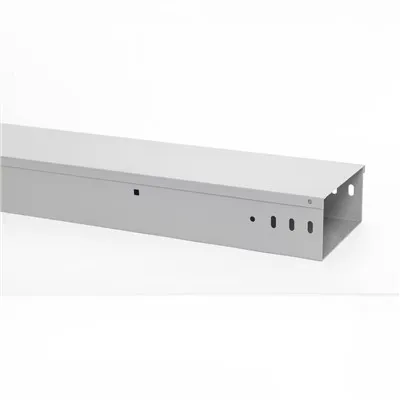
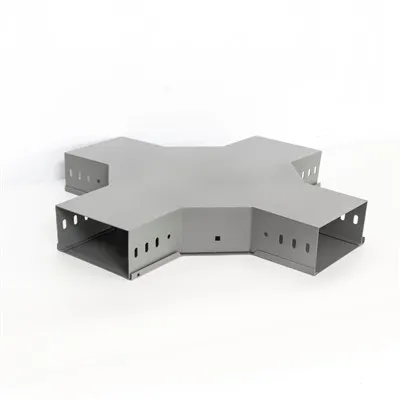
Galvanized Steel Cable Tray
Cable tray is widely used in various construction projects, particularly as a roadway and bridge system connecting different buildings and underground pipe galleries. There are different types of cable tray structures available, including slot yoga style, steel tray and ladder desktop style, and grid format file. The mechanical equipment of cable tray comprises fixed support, brackets, and installation parts, offering a simple structure, unique product design, flexible configuration, and convenient maintenance.
Now, let's explore the dissimilarities between hot-dip galvanized cable tray and galvanized cable tray. Although both types involve a galvanization process, there are distinctive features that set them apart.
When comparing hot-dip galvanized bridges and galvanized cable trays, there are certain differences to take into account. Hot-dip galvanization refers to the process of coating steel structures, such as bridges, with a layer of zinc to protect them from corrosion. On the other hand, galvanized cable trays are used for organizing and supporting electrical cables in industrial and commercial settings. Despite sharing the galvanization process, these two structures serve different purposes and have distinct characteristics.
Firstly, the main difference lies in their intended use. Hot-dip galvanized bridges are designed to provide a sturdy and durable structure for supporting vehicles, pedestrians, and other forms of transportation. They are constructed to withstand heavy loads, harsh environmental conditions, and the test of time. In contrast, galvanized cable trays are specifically designed to facilitate the installation, organization, and protection of electrical cables. Their main purpose is to ensure the safe and efficient distribution of power and control cables within buildings or industrial plants.
Another significant difference is the size and design of these structures. Bridges are large-scale civil engineering projects, often spanning across rivers, valleys, or roadways. They are typically long and wide, with intricate architectural and engineering designs to accommodate various traffic loads. Conversely, galvanized cable trays are smaller in size and have a simpler design. They are usually installed along the walls, ceilings, or under raised floors to support and route electrical cables.
The materials used in hot-dip galvanized bridges and galvanized cable trays can also differ. Bridges are typically made of steel or concrete, whereas cable trays are commonly constructed from galvanized steel, aluminum, or stainless steel. The choice of materials depends on the specific requirements concerning load capacity, durability, and environmental factors.
Furthermore, the maintenance and inspection procedures for these structures differ. Hot-dip galvanized bridges require periodic inspections to ensure their structural integrity and functionality. This involves assessing the overall condition of the bridge, inspecting the galvanized coating, and addressing any necessary repairs or maintenance. In contrast, galvanized cable trays require regular inspections to check for cable integrity, identify potential cable damage or obstructions, and ensure proper cable routing.
In conclusion, although both hot-dip galvanized bridges and galvanized cable trays undergo a similar galvanization process, they serve different purposes, have distinct designs and sizes, utilize different materials, and require unique maintenance and inspection procedures. Understanding these differences is crucial in order to effectively utilize and maintain these structures in their respective applications.
Hot dip galvanization, also known as hot dip galvanizing, is an effective process used to enhance the durability and corrosion resistance of cable trays. This process involves grinding and polishing the cold galvanized bridge to remove the existing zinc layer. Subsequently, the cable tray is immersed in a high-temperature zinc solution, typically at around 600 °C, which facilitates the formation of a robust zinc coating on its surface. This thick zinc layer significantly improves the characteristics of the cable tray, enhancing its resistance to corrosion and extending its overall service life. In comparison to standard galvanized cable trays, the hot dip galvanized variety offers superior performance and longevity in various applications.
Cold galvanizing, also known as electro galvanizing, is a process used in the manufacture of cable trays. The first step involves treating the steel plate surface to remove any organic chemical sewage. The plate is then placed into an electroplating solution containing active zinc oxide. A stabilized voltage power supply is connected to the steel plate and a cold-rolled plate immersed in the solution. As the electricity flows through the solution, the zinc molecules are deposited onto the surface of the steel plate, creating a molecular bond. For a finishing touch, a polishing liquid can be added to passivate the steel, resulting in a beautiful rose-colored sheen that resembles a bright coating.
Hot Tags: galvanized steel cable tray, China galvanized steel cable tray manufacturers, suppliers, factory
Previous
No InformationYou Might Also Like




Send Inquiry